Costco’s filing describes a model built on fewer than 4,000 items per warehouse and case quantities. For everyone else the test is physical: a container, a production run and a stock-cover cycle have to fill at the same time.
What the evidence shows
Costco’s Form 10-K describes an operating model; it discloses no sourcing threshold, no seafood-specific item count and no outcome from buying direct. The container arithmetic below uses published carrier dimensions and one derived pallet count, and converts none of it into a price.
Table of Contents
The threshold unit is wrong
Retailers usually ask whether they are big enough for factory-direct buying, and answer in tonnes. Tonnage is the wrong unit. A container is filled by positions, and a production line is filled by runs. A retailer with a large category and forty specifications can fail every test that a smaller retailer passes with one item that carries the category.
The threshold is the smallest order that keeps three things full at once: a container, a production run, and a stock-cover cycle that does not outlive the product.
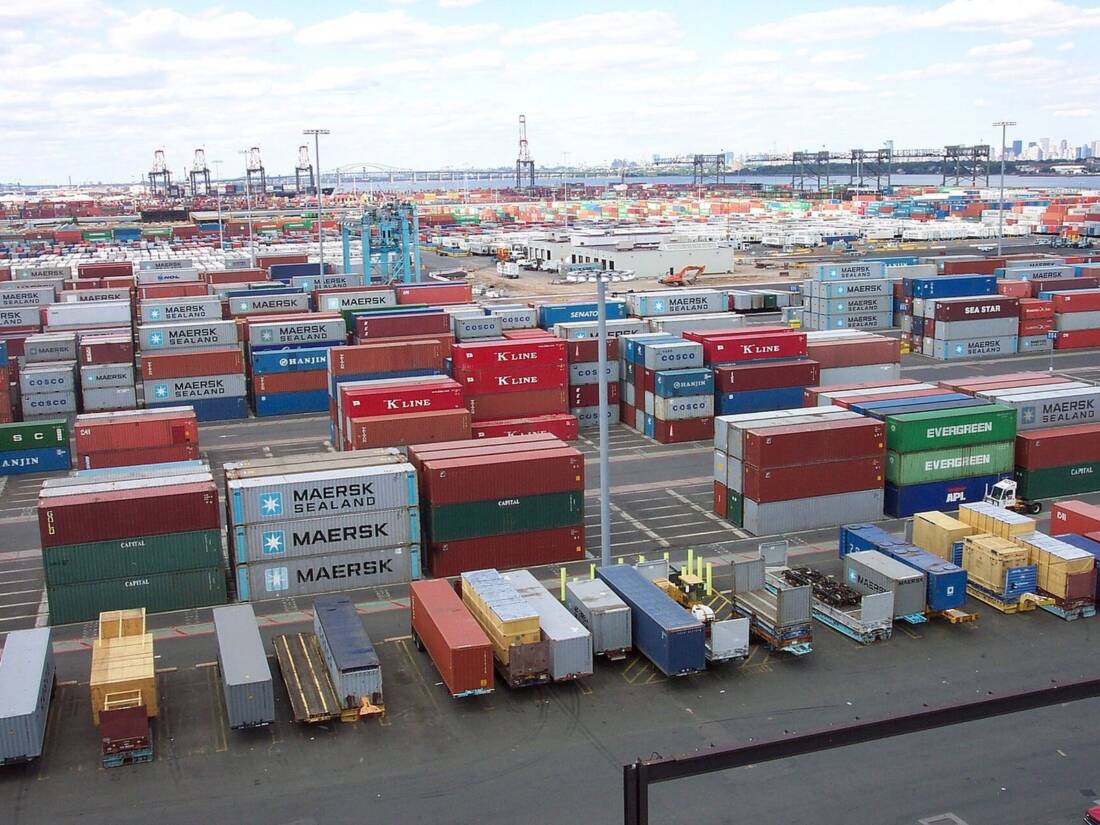
What one container actually holds
Frozen shrimp moves in a reefer. Maersk publishes the 40ft high cube standard reefer at 11,580 mm internal length, 2,275 mm internal width and 2,415 mm to the load line, with a nominal 67.5 m³ and a maximum payload of 29,480 kg (Maersk, n.d.).
Load it with 1,200 × 1,000 mm pallets, 1,000 mm across and 1,200 mm along. Two fit across, using 2,000 mm of the 2,275 available. Nine fit along, using 10,800 mm of 11,580. The plan below assumes a single tier: two tiers of 1.2 m would consume 2,400 mm of the 2,415 mm load line, leaving 15 mm for dunnage and loading tolerance. That is 18 positions, and about 1,640 kg per position before the payload limit bites, Ecosea arithmetic from Maersk’s dimensions, before door clearance and dunnage.
The consequence is simple and often missed. If your pallet weighs less than about 1,640 kg, the container fills by position before it fills by weight, and the constraint you are managing is pallet count, not tonnage. If your pallet is heavier, weight binds first and you cube out with air.
Cases → Pallet, 1,200 × 1,000 mm → Reefer, 40ft high cube
Two more clocks
A container is only one of three constraints. The second is the production run: what a line must make before changeover, raw-material lot and packaging costs make the order worth scheduling. That number is not public for any factory, and no honest article can supply it. It is a question you ask, along with what sets it, a raw-material lot, a print run, a shift.
The third is stock cover. Frozen storage slows spoilage; it does not stop the clock. US consumer guidance puts frozen shrimp at three to six months for quality, and states that freezer times are “for quality only” (U.S. Food and Drug Administration, 2018). Commercial specifications and colder storage run longer, and your customer’s code-life rule sets the real limit. Use your own number; the structure of the test does not change.
At three to six months of cover, a specification needs two to four deliveries a year. If each delivery is a full container, that specification needs 18 positions every quarter at the short end, 72 pallets a year before the container and the shelf life agree. Order once a year instead and some of the stock is twelve months old when it sells, twice the longest window in that guidance.
What Costco’s filing says
Costco is the public example of the opposite approach. Its 2025 Form 10-K describes the model in one sentence: low prices on “a limited selection of nationally-branded and private-label products” produce “high sales volumes and rapid inventory turnover”, and those volumes let it “operate profitably at significantly lower gross margins (net sales less merchandise costs) than most other retailers” (Costco Wholesale Corporation, 2025).
The numbers behind that sentence are the point. Costco carried “less than 4,000 active stock keeping units (SKUs) per warehouse in our core warehouse business, significantly less than other broadline retailers”, and sells “many consumable products… in case, carton, or multiple-pack quantities only”. It also reports that it often sells inventory before it is required to pay for it.
What the filing does not say: how many of those items are seafood, what any factory minimum is, or what changed. It is a description of a standing model as at 31 August 2025, not a sourcing experiment with a result. The model transfers as a mechanism, concentration per item, case quantities, fast turns, not as a threshold anyone can copy.
| Theme | Costco’s 2025 Form 10-K | What it does not say |
|---|---|---|
| Assortment | “less than 4,000 active stock keeping units (SKUs) per warehouse in our core warehouse business, significantly less than other broadline retailers” | How many of those items are seafood, or what share any one category holds. |
| Pack size | “Many consumable products are offered for sale in case, carton, or multiple-pack quantities only.” | Cases per pallet, order frequency, or any minimum from a supplier. |
| Inventory | “We often sell inventory before we are required to pay for it, even while taking advantage of early payment discounts.” | Any working-capital measure, payment term or stock-cover figure. |
| Buying | “We buy most of our merchandise directly from suppliers”, via depots or directly to warehouses. | Whether that reaches factory level for seafood, in which origins, or on what terms. |
Concentration, not category volume
This is why “how much shrimp do we sell?” cannot be answered at category level. Forty specifications at 200 cases each is 8,000 cases and no container. Two specifications at 4,000 cases each is the same tonnage and a programme.
The matrix is deliberately crude. High concentration with high frequency is factory territory. High concentration with low frequency is a container you hold, and a stock-cover problem. Low concentration with high frequency is a mixed container or an importer, depending on how much changeover and sorting you will buy. Low concentration with low frequency is not a sourcing decision at all.
Mixing specifications into one container lowers the per-item threshold, and it is usually the honest answer for a mid-sized retailer. It also adds a cost the container diagram cannot show: changeovers at the factory, and sorting at your distribution centre.
What to do next
Three questions, in this order.
- Positions per delivery, and how often. How many pallet positions does this specification take, and how many deliveries a year can you absorb without exceeding its cover?
- The factory’s minimum run, and what sets it. Ask what the number is protecting, a raw-material lot, a packaging print run, a shift, because that is what a larger order actually buys.
- The cover your customer’s code life allows. If the answer is shorter than the gap between deliveries, the container is not the constraint; the calendar is.
If the three answers do not overlap, the constraint is not price, and no negotiation will fix it. Buy that specification through an importer, or consolidate it with others and accept the changeover.
The threshold is not a tonnage. It is the point where one container, one run and one shelf life stop arguing with each other.
What this does not show No factory minimum order quantity, freight rate, duty rate or landed cost appears here, because none of them is public and comparable for a named specification. The 1,640 kg figure is arithmetic on a carrier’s payload, not a claim about what any pallet of shrimp weighs.
Ecosea works with factories on product development, specification and qualification, and supports sampling, quality and execution. If the constraint is specification rather than volume, that is the part we can test first.
Before the first container
Testing a factory-direct programme? Ecosea can help define the specification, qualify the factory and run a sample against it, so the volume question is asked about a real product.
References
- Costco Wholesale Corporation. (2025). Annual report on Form 10-K for the fiscal year ended August 31, 2025. U.S. Securities and Exchange Commission. https://www.sec.gov/Archives/edgar/data/909832/000090983225000101/cost-20250831.htm
- Maersk. (n.d.). Our fleet: Reefer equipment specifications [PDF]. Retrieved November 1, 2026, from https://www.maersk.com/~/media_sc9/maersk/local-information/files/africa/south-africa/important-information/container-type-and-sizes/reefer-equipment-specifications-updated.pdf
- U.S. Food and Drug Administration. (2018, March). Refrigerator and freezer storage chart [PDF]. https://www.fda.gov/media/74435/download