Four tests decide whether a seafood flavour range extension adds something or splits something. They are diagnostic, not a score, and the hardest case is the one where the category grows while the new SKU only moves volume sideways.
What the evidence shows
Birds Eye’s UK product pages, read on 1 November 2026, describe two lightly dusted fish fillets that differ only by seasoning: rosemary and sea salt, and lemon and cracked black pepper. Both declare Alaska pollock at 70%, two fillets, a breadcrumb coating, rapeseed oil, and the same three allergens: fish, gluten and mustard. Both cook from frozen in an oven at 220 °C, though the stated time differs by two minutes. The pages publish no sales, facings or shopper data. The tests below are Ecosea’s, not the brand’s.
Table of Contents
Two packs, one product in a seafood flavour range
The cheapest line to add to a frozen range is a flavour. It reuses the raw material, the coating line, the fryer, the packing format and the artwork template. The question is not whether it tastes different. It is whether it does anything the range does not already do.
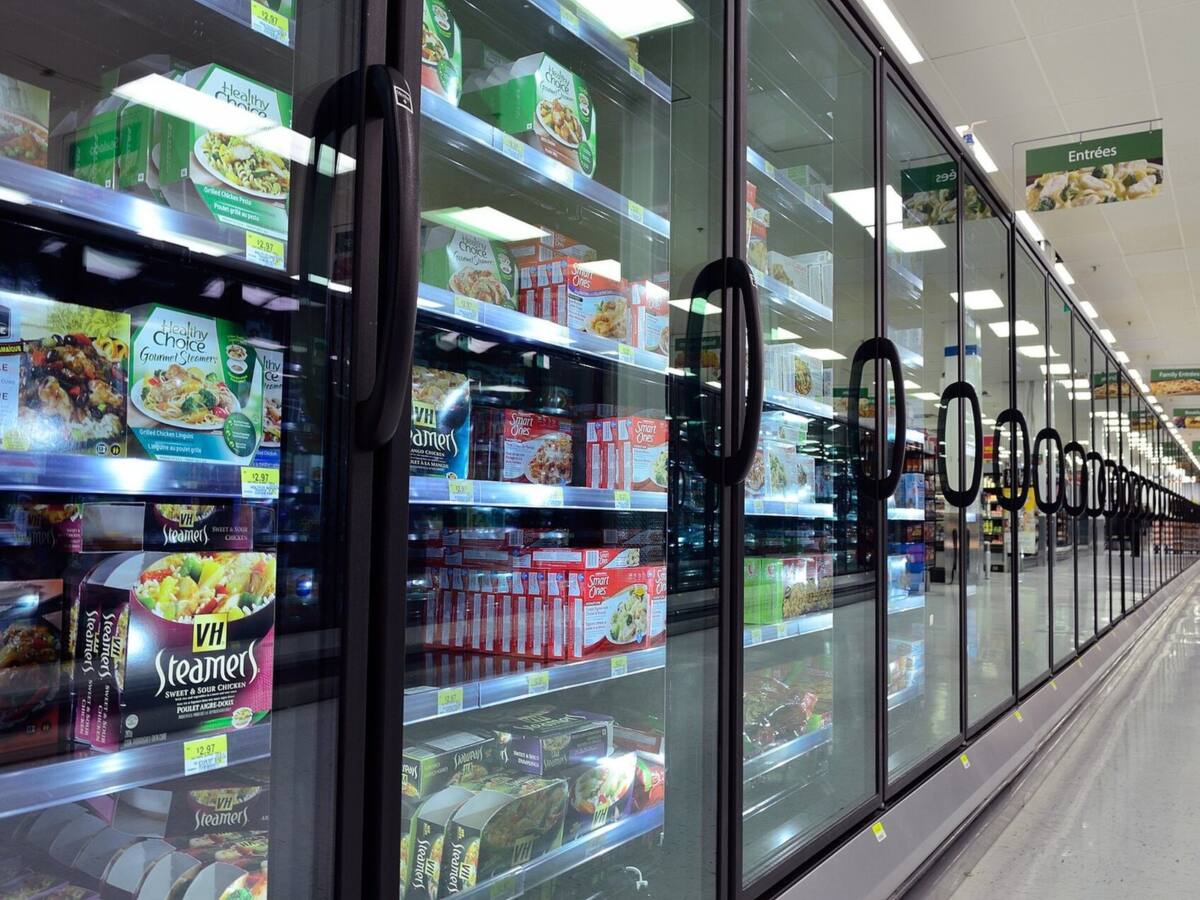
The two lightly dusted fillets are the cleanest example in the sample because almost everything is held constant. Same brand, same species, same declared fish content, same count, same coating system, same allergen statement, same cooking route. The seasoning differs, and the oven time differs by two minutes. At the fixture, in four seconds, the shopper sees two packs of the same product with different-coloured names.
That is not an argument against flavour. It is an argument for asking what the flavour is for. If the answer is “a shopper who wants lemon rather than rosemary”, the next question is whether that shopper exists in enough numbers to justify a facing, and whether the range already serves them with a different product.
| Test | Question | What passes | Evidence |
|---|---|---|---|
| What does it add? | An occasion, a price point, a format or a shopper? | One of the four, named in a sentence | The named occasion or shopper appears in basket or switch data |
| What does it take? | Which existing SKU loses the volume? | A named SKU, same stores, same weeks | Like-for-like movement of the named donor |
| Can a shopper tell? | In four seconds at two paces, what is different? | A difference visible without reading the pack | A shop-floor test with shoppers, not staff |
| Does it earn the space? | What comes out to make room? | A named delisting, shared facing or smaller pack | A space decision agreed before launch |
Four tests, one at a time
What does it add? An extension can add an occasion, a price point, a format or a shopper. Name which one before the concept. An occasion is a moment the range does not serve: a lunch, a sharing plate, a Friday alternative. A price point is a rung the ladder does not hold, measured in price per kilogram, not pack price. A format is a different piece, coating or cooking method. A shopper is a group the range does not reach: a dietary need, a household size, a species preference. “A new flavour” is not on the list. It is a means, not an addition.
What does it take? Name the existing SKU the new one will take volume from. Not “the category”, not “competitors”: a named SKU, in the same stores, over the same weeks. If no name can be written, the extension is either genuinely new or unexamined, and the difference matters before launch, not after.
Can a shopper tell? Four seconds at the fixture, from two paces, without picking up the pack. If the shopper cannot say what the difference is, the extension is competing for the same decision. That is a design question about the product and the name, not a reason to add more words.
Does it earn the space? Space is finite and the retailer allocates it. An extension that cannot say what comes out to make room is asking for a bigger range, not a better one. The answer may be a delisting, a shared facing or a smaller pack, and it should be decided before the launch.
What the tests say about four pairs
The sample offers four comparisons, and they do not all fail.
Rosemary against lemon. Same species, same 70% fish, same count, same coating, same allergens, same oven. It adds a seasoning and nothing else. The shopper test fails before the tasting starts, because the two packs describe the same product. This is the case for one SKU with a rotating flavour, or for a flavour that changes the format as well, not for two permanent facings.
Cod against haddock. Both declare 51% fish, four fillets and the same breadcrumb coating. The species differ, and so does the shopper’s preference. This one can add a shopper, but only if the range does not already hold both preferences, and only if the shopper is willing to switch species rather than walk. The test is a named switch, not a taste.
Chunky breadcrumb pollock against crispy batter basa. The fish content is close, 56% and 55%, but the coating, the species and the piece size all differ. This adds a format and an eating experience, and a shopper can see the difference without reading. It passes the tests that the flavour pair fails.
Ten fingers against six chunky fingers. The count differs, and the name promises a larger piece, which changes the portion and probably the price point. The pages publish no price, so the price test cannot be run from this sample; it needs the retailer’s ladder.
| Pair | What differs | What it adds | Ecosea reading |
|---|---|---|---|
| Rosemary & sea salt vs lemon & black pepper | Seasoning; oven time 20–22 vs 18–20 minutes | A flavour only | Same job; fails the shopper and format tests |
| Cod vs haddock fillets | Species; both 51% fish, same coating, four fillets | A species preference | Adds a shopper if the switch is real |
| Chunky pollock vs crispy batter basa | Coating, species and piece size; 56% vs 55% fish | A format and an eating experience | Passes if the range lacks the format |
| Ten fingers vs six chunky fingers | Count and piece size; 58% vs 56% fish | A portion, and probably a price point | Price test needs the retailer’s ladder |
The uncomfortable case
A category can grow while a specific SKU only moves volume sideways. The new line brings visibility, a second facing or a new name on the fixture, and the category total rises. The same result appears if every unit of the new SKU came out of its sibling: the shelf looks fuller, the category number is up, and the increment is zero.
The reverse also happens. A category can stay flat while a new SKU is genuinely incremental, because it replaced a shopper who had stopped buying rather than a shopper who was already there. Category growth is not proof of incrementality in either direction. The test is what happened to the named sibling, in the same stores, over the same weeks, and whether the shopper who bought the new line was already buying the old one.
Grows the category
A new shopper or a new occasion
- The named donor holds its volume.
- The new units come from outside the pair.
- The total rises for a reason you can name.
- The test is the donor, not the total.
Moves volume sideways
The same shopper, the same occasion
- The named donor falls as the new SKU gains.
- The total can still rise on visibility and facings.
- More shelf, same demand.
- The increment is zero even when the category is up.
What this does not show Without scan or basket data, this article cannot see transfer between SKUs. It can tell you where to look and what to name before you look. It cannot tell you whether shoppers prefer lemon or rosemary: that is a consumer question, and the four-second test is a shop-floor observation, not a consumer study. It cannot tell you what the retailer will allocate, and it cannot tell you whether a listing will sell. A listing is an offer, not a result.
What to do next
- Write the addition in one word. Occasion, price point, format or shopper. If the word is “flavour”, the work is not finished.
- Name the SKU it takes from. Same stores, same weeks. A blank name is a finding, not a formality.
- Run the four-second test before the tasting. Two paces, no pack in hand, one question: what is different?
- Decide what comes out. A range that only grows is a range that has stopped choosing.
A flavour can be a good product and a poor strategy. The difference is whether it adds a job to the range or splits an existing one, and that is decided before the first sample, not after the first review. The role of the SKU is the prior question; the duplication test is the check on the answer, and differentiation from the brand is the next one.
Ecosea works on seafood product development, category and specification support. If an extension is being briefed, the first useful step is a named addition, a named donor and a fixture test.
Range extension review
Before the next flavour. Ecosea can test the extension against the range, name the donor SKU and set the evidence that would stop it.
References
- Birds Eye. (n.d.-a). 2 Lightly Dusted Fish Fillets with Rosemary & Sea Salt. Retrieved November 1, 2026, from https://www.birdseye.co.uk/range/fish/2-lightly-dusted-fish-fillets-rosemary-and-seasalt
- Birds Eye. (n.d.-b). 2 Lightly Dusted Fish Fillets with Lemon & Cracked Black Pepper. Retrieved November 1, 2026, from https://www.birdseye.co.uk/range/fish/2-lightly-dusted-fish-fillets-with-lemon-and-cracked-black-pepper
- Birds Eye. (n.d.-c). 4 Cod Fillets in Breadcrumbs. Retrieved November 1, 2026, from https://www.birdseye.co.uk/range/fish/4-cod-fillets-in-breadcrumbs
- Birds Eye. (n.d.-d). 4 Breaded Haddock Fillets. Retrieved November 1, 2026, from https://www.birdseye.co.uk/range/fish/4-haddock-fillets-in-breadcrumbs
- Birds Eye. (n.d.-e). 6 Chunky Fish Fingers. Retrieved November 1, 2026, from https://www.birdseye.co.uk/range/fish/6-chunky-fish-fingers
- Birds Eye. (n.d.-f). 6 Crispy Batter Chunky Fish Fingers Extra Large. Retrieved November 1, 2026, from https://www.birdseye.co.uk/range/fish/6-crispy-batter-chunky-fish-fingers-extra-large
- Birds Eye. (n.d.-g). 10 Omega 3 Fish Fingers. Retrieved November 1, 2026, from https://www.birdseye.co.uk/range/fish/10-omega-3-fish-fingers