Five seafood substitution requests arrive dressed as availability. Each changes a different clause, and each needs a different kind of yes.
What the evidence shows
Read on 1 November 2026: CXS 92-1981, CXS 190-1995, CXS 166-1989 and the general Codex labelling standard. CXS 92 allows a pack to mix species of the same genus where sensory properties are similar, while the label may name the food simply as shrimps or prawns — which is the case that makes a substitution invisible on the pack. No substitution request, approval record or label proof was available, and this is not a compliance opinion.
Table of Contents
The seafood substitution request that sounds like a formality
The message says the count is short, and the factory can offer the grade above it at the old price. It reads as a courtesy: same species, same pack, same label, a little larger. The buyer who says yes in one line has approved a change to the product, not to the schedule.
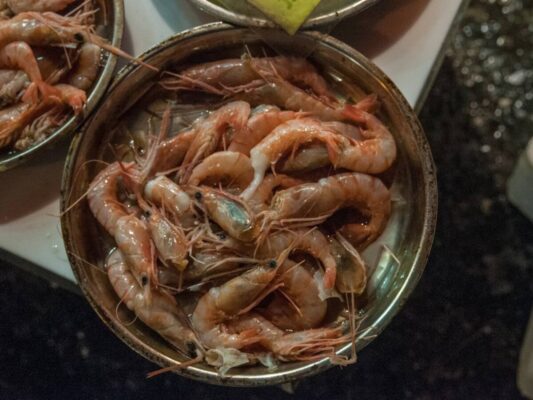
Codex shows how narrow the gap can be. CXS 92-1981 permits a pack to contain a mixture of species of the same genus with similar sensory properties, but not a mixture of genera (section 2.1). The name on the label is “shrimps” or “prawns” according to the law and custom of the market, with the presentation described in close proximity (section 6.1), and the general labelling standard forbids any presentation that is false, misleading or likely to create an erroneous impression (Codex Alimentarius Commission, 1985, section 3.1). A swap between two species of the same genus can therefore leave the label intact and still change what the buyer eats.
That is the hard case, and it is the reason a substitution needs a route rather than an answer.
Five substitutions, five clauses
Most requests belong to one of five types, and each type moves a different part of the specification.
Size grade moves the count band and the piece weight, and with them the yield on the plate. It is the easiest to check and the easiest to wave through, because the pack still weighs the same.
Origin or raw material source moves the species, the catch or farm, the origin statement and often the eating quality. Two fillets of the same species from different waters are not the same product, even when the specification’s species line is unchanged.
Coating or ingredient moves the fish content, the allergen declaration and the cooking behaviour. For breaded products the proportion of fish content should be declared (Codex Alimentarius Commission, 1989, section 6.1), so a thicker pickup is a labelled change, not a process note.
Pack or net weight moves the grams in the box, the price per kilo and the portions per pack. For glazed product, net contents are declared exclusive of the glaze (Codex Alimentarius Commission, 1981, section 6.2; Codex Alimentarius Commission, 1995, section 6.2), which means a glaze change and a weight change are two separate questions.
Process moves the freezing method, the cooking step, the block or individually frozen format. It can leave every number on the label identical and still change how the product behaves in the oven.
| Type | What it moves | What proves it acceptable | Who must be told |
|---|---|---|---|
| Size grade | The count band, the piece weight and the yield on the plate. | A weighed count on the new grade, against the retained reference, by the same method. | The buyer’s technical lead; the customer if the pack copy names a size. |
| Origin or raw material source | Species, catch or farm, the origin statement and often the eating quality. | Traceability documents, plus a sensory comparison where the species or source differs. | The importer, the brand owner and the buyer’s quality lead. |
| Coating or ingredient | Fish content, the allergen declaration and cooking behaviour. | A sample with fish content declared, and a specification amendment if the pickup leaves the agreed band. | The brand owner and the importer, before artwork is reissued. |
| Pack or net weight | Grams per pack, price per kilo and portions per pack. | A weight check on the method named in the specification, plus an updated declaration. | The buyer; the customer if pack copy states a weight. |
| Process | Freezing method, glazing, cooking, block or individually frozen format. | A sample cooked by the agreed protocol, and process records for the run. | The buyer’s quality lead and the factory’s quality signatory. |
Sample or document?
The test is not how large the change feels. It is whether the change can be measured against the reference you already approved. If it can be seen, weighed, counted or tasted, it needs a sample. If it only changes what a document declares, a document may be enough, provided the declaration is reissued.
Size grade needs a weighed count on the new grade, using the same method as the approved sample. Origin needs traceability documents, and a sensory comparison whenever the species or the source changes. Coating needs a sample with the fish content declared. Net weight needs a weight check on the method named in the specification, not on whichever method the laboratory prefers. Process needs a sample cooked by the agreed protocol.
A document alone is never enough when the customer would notice the difference on the plate.
The route
The first step is naming the type. “Availability” is not a type; “size grade” is. The second is opening the specification and finding the clause the change touches, which is also the step that reveals whether the change is allowed at all.
The third is deciding the evidence before anyone tastes anything. A panel told that the sample is “the same product, slightly larger” will find what it was told to find. The fourth is testing against the retained reference, same protocol, same day, coded samples — the discipline described in switching a supplier without a gap, applied one change at a time.
The fifth is the record: what was requested, what was tested, what was decided, who signed, and what the customer will be told. A decision that exists only in a reply is not an approval.
- Name the type“Availability” is not a type. Size grade, origin, coating, pack or process: pick one and write it down.
- Open the specificationFind the clause the change touches. If the clause forbids it, the request is a specification change, not a substitution.
- Decide the evidenceSample or document, chosen before anyone tastes anything, against a threshold written in advance.
- Test against the referenceSame protocol, same day, coded samples. One change at a time, so the result means something.
- Record and notifyRequest, test, decision, signature and the label consequence, in one place with a date.
The invisible swap
The substitutions that cause the most trouble are the ones that leave the pack unchanged. A new origin within the same species. A glaze increase that holds the declared net weight. A coating pickup that creeps up while the fish content on the label stays where it was. A count that shifts by one grade inside a band the specification left open.
None of these needs a new photograph. All of them need a new decision, because the specification you approved described a product and the product has moved. If the change touches species, origin, ingredients, fish content or net weight, the declaration may change with it. Confirm the labelling consequence with the brand owner and the importer before the next production run, not after the first delivery.
What this cannot tell you
This is an approval route, not a compliance opinion. Whether a customer must be told, and in what words, depends on the market’s rules and on the contract; your importer and your counsel answer that question, not this article. Nor can it tell you whether a substitution is acceptable on the plate. A “similar” species is a claim to test, not a category to trust, and a trained panel is the only instrument that answers it.
What the route does give you is a decision with a date, a reason and a signature — which is what you will need if the swap turns out to be the start of a price revision rather than an interruption to one.
What to do next
- Write the five types into the change clause. A specification that says “no substitution without approval” has not said what approval means.
- Keep one retained reference per specification version. Without it, every comparison is against memory.
- Decide sample or document before the panel meets. Write the threshold down while the request is still abstract.
- Record the decision and update the label before the next run. The record is the approval; the label is the consequence.
A substitution is not a favour to the supplier or an insult to the buyer. It is a change to a document, and the document should say so.
Before the first container
Testing a direct programme? Ecosea can help define the specification, qualify the factory and run a sample against it — so the comparison starts from a real product.
References
- Codex Alimentarius Commission. (1981). Standard for quick frozen shrimps or prawns (CXS 92-1981; revised 1995). FAO/WHO. https://www.fao.org/input/download/standards/107/CXS_092e.pdf
- Codex Alimentarius Commission. (1985). General standard for the labelling of prepackaged foods (CXS 1-1985; amended 2010). FAO/WHO. https://www.fao.org/input/download/standards/32/CXS_001e.pdf
- Codex Alimentarius Commission. (1989). Standard for quick frozen fish sticks (fish fingers), fish portions and fish fillets — breaded or in batter (CXS 166-1989; amended 2014). FAO/WHO. https://www.fao.org/input/download/standards/112/CXS_166e_2014.pdf
- Codex Alimentarius Commission. (1995). Standard for quick frozen fish fillets (CXS 190-1995; amended 2014). FAO/WHO. https://www.fao.org/input/download/standards/115/CXS_190e.pdf