A seafood price revision can come from the fish, the specification, the yield or the terms. Only the first is a market you cannot argue with.
What the evidence shows
Read on 1 November 2026: the Codex standards for quick frozen shrimp, fillets and breaded products, and the ICC’s published material on Incoterms 2020. Two of those standards measure the same thing — the net weight of a glazed product — with different apparatus and different handling, which is enough to show that a weight claim and a price claim are separate questions. No supplier’s revision letter, quotation or cost build-up was available, so nothing here describes a real price movement.
Table of Contents
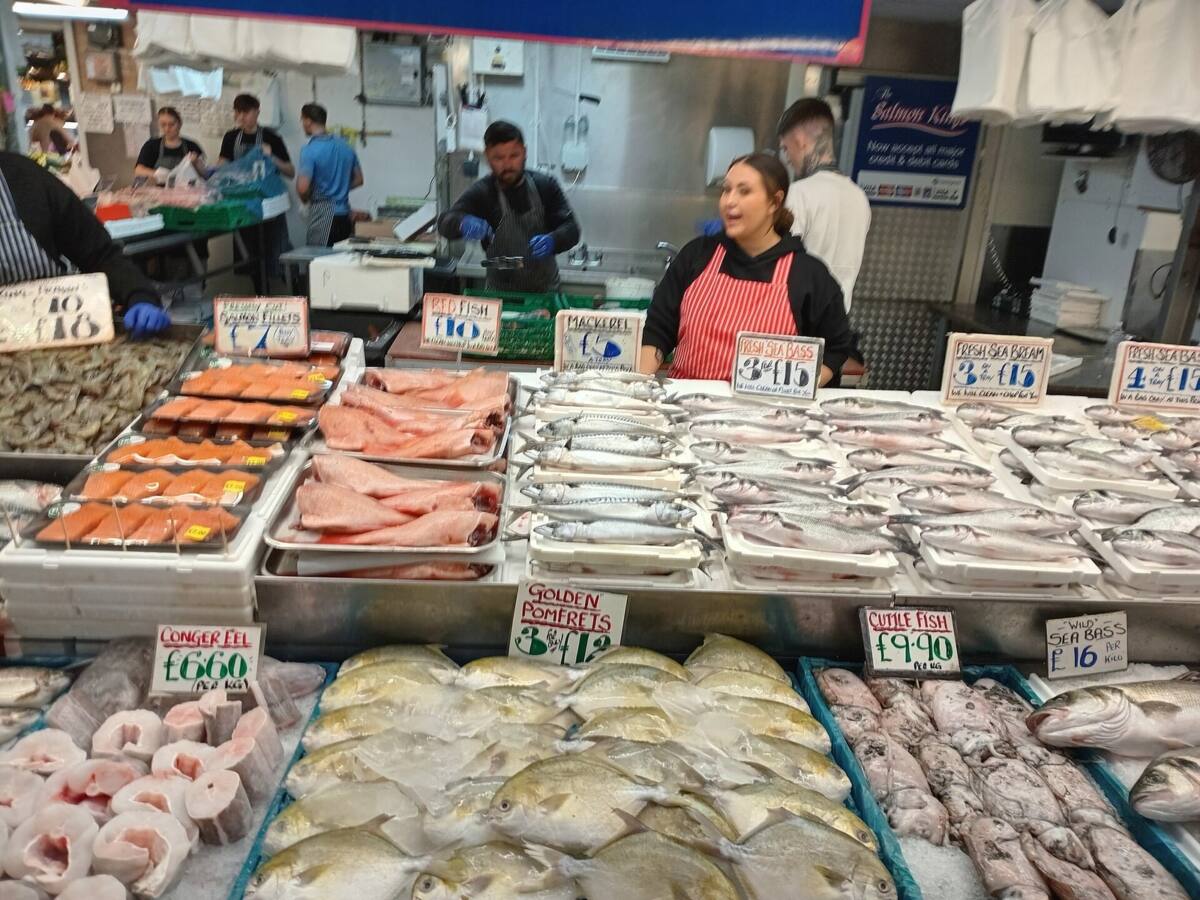
Four causes of a seafood price revision, one number
The email says the price has moved on raw material. It offers one line, one date and one number, and it asks you to accept a compound claim on the strength of its shortest part.
Start with the word “weight”. CXS 92-1981 tells a shrimp buyer to open the pack, wash the contents, empty them onto a sieve with 2.8 mm apertures, incline it to about 20 degrees, drain for two minutes and then weigh (Codex Alimentarius Commission, 1981, section 7.3). CXS 190-1995, for fish fillets, says to spray the contents with cold water, remove the adhering water with a paper towel and weigh in a tared pan (Codex Alimentarius Commission, 1995, section 7.3.1). Same question, two procedures, two numbers. A revision that says “net weight” without naming the method has not told you which number it means.
A revised price can contain four different things. Raw material movement is the one suppliers name. Specification change, yield or process change, and commercial condition change are the three that hide behind it.
| Cause | What actually changed | Evidence to ask for | Question that exposes it |
|---|---|---|---|
| Raw material | The cost of the fish or shrimp at the factory gate, for the grade and the week quoted. | The raw-material purchase date and grade, and the date the previous quote was built. | “Which grade, bought in which week, and what did the old quote assume?” |
| Specification | Size grade, glaze share, coating pickup or declared net weight. | Both specification versions, with fish content and the net-weight method named. | “If the pack still holds the same grams of fish, why has the price per pack moved?” |
| Yield or process | What the line gets out of a tonne: trim, cooking yield, block or individually frozen. | A yield record from the last run, and from the run the old quote was based on. | “Is this price per kilo of finished product, or per kilo of raw material?” |
| Commercial condition | Incoterm, named place, payment days, volume or validity. | The same product restated on the terms you agreed last time, with the date of the restatement. | “What does it cost on the terms we agreed in March?” |
The specification is the cheapest place to hide a rise
A pack can keep its price and lose product. If the declared net weight falls and the pack price does not, the price per kilogram of product has moved without a single number on the quotation changing.
Illustrative arithmetic — not a market observation Assumptions: the pack price stays at whatever figure the buyer is quoted; declared net weight falls from 1,000 g to 980 g; the glaze share is unchanged; nothing else about the product changes. Price per kilogram of product is pack price divided by net weight, so it rises by 1,000 ÷ 980 − 1 = 2.0 per cent. Different assumptions give a different answer, and the point is the direction, not the size.
Glaze is the most common version of this. Codex requires the net contents of a glazed product to be declared exclusive of the glaze (Codex Alimentarius Commission, 1981, section 6.2; Codex Alimentarius Commission, 1995, section 6.2). That is unusually clear: the ice is not the product. If the glaze share rises and the declared net weight falls to match, the fish in the box is unchanged. If the glaze rises and the declared weight stays where it was, you are buying water at the fish price. The arithmetic of that trade is worked through in the glaze and net-weight test; the question here is only whether the quote has moved with it.
Coating behaves the same way, one step further from the label. For breaded or battered products, the proportion of fish content should be declared (Codex Alimentarius Commission, 1989, section 6.1). A coating that moves from a thin to a thick pickup changes the fish content of every pack, and with it the thing you thought you were buying. The quotation may call this a process improvement.
Once a price change turns out to be a product change, the two questions separate. The price is settled here; the product itself goes through the substitution route, where the clause, the sample and the label consequence are decided.
Yield and process are not the market
Two factories can quote different prices for the same specification because one gets more saleable product out of a tonne of raw material. That is a real difference, and it belongs in the comparison — which is why you normalise both quotes before you read either price.
It is not the same as a raw-material rise. A supplier who improves yield and keeps part of the gain is entitled to keep it; the buyer’s question is whether the change has been charged twice — once as a raw-material increase and once as a price for the new process. The evidence is a yield record for the last run, not a sentence about investment.
The same test applies to freezing and packing. Block frozen and individually frozen product behave differently in the box and on the line, and a change between them is a specification change even when the species and the count are identical.
Terms can move a price without moving a cost
The Incoterm is part of the price, not a label on it. The ICC’s rules allocate the tasks, costs and risks of delivery between seller and buyer (International Chamber of Commerce, 2020). Move from one rule to another, or move the named place, and cost changes hands without the fish changing at all.
Payment terms do the same. A price that falls when payment moves from 30 days to cash is not a discount; it is the cost of the wait, moved to you. Volume and validity belong in the same group. A price held for a month on a volume you may never reach is a different offer from a price held for a quarter.
The test is simple: ask for the same product, at the same specification, restated on the terms you agreed last time. If the supplier cannot or will not, the revision is not comparable yet.
What to ask for, cause by cause
- Both specification versions, dated. The net-weight method should be named, with its apparatus and draining time.
- The raw-material record behind the new price. Grade, purchase date and quantity, not a sentence about the market.
- A yield record from the last run. And the run the previous quote was built on, so the two can be compared.
- The old quotation rebuilt line by line. Same product, same specification, today’s costs.
- The same product on the old terms. Previous Incoterm, named place and payment days.
- A validity date and a volume. The price should say what it depends on and when it expires.
Ask for structure, not open books. You are not entitled to a supplier’s margin. You are entitled to know what changed between two documents you can both read, and to a price that can be rebuilt from them.
What this cannot tell you
This article cannot tell you whether a particular rise is justified. No index appears here, because an index describes a category and you buy a specification; a rise can be entirely real and still contain a specification change worth arguing about. Nor can it tell you what a fair price is. Only your own comparison, run twice on the same method, can do that.
The method cuts both ways. If your benchmark weighs product one way and the factory weighs it another, you will spend the meeting comparing a sieve with a paper towel.
What to do next
- Restate the old quote on today’s terms. Same specification, same Incoterm, same payment days. Until then you are comparing two offers, not two prices.
- Ask for both specification versions, dated. The net-weight method should be named, with its apparatus and its draining time.
- Price the change per kilogram of fish. Not per pack, and not per case. A pack that shrank is a price rise with a smaller box.
- Put validity and notification in the next order. A price with no end date and no duty to tell you when its basis changes is not a price you can plan on.
A revised quote is a document with four possible causes, and only one of them is nobody’s fault. The rest are decisions someone made about what you would not notice.
Before the first container
Testing a direct programme? Ecosea can help define the specification, qualify the factory and run a sample against it — so the comparison starts from a real product.
References
- Codex Alimentarius Commission. (1981). Standard for quick frozen shrimps or prawns (CXS 92-1981; revised 1995). FAO/WHO. https://www.fao.org/input/download/standards/107/CXS_092e.pdf
- Codex Alimentarius Commission. (1989). Standard for quick frozen fish sticks (fish fingers), fish portions and fish fillets — breaded or in batter (CXS 166-1989; amended 2014). FAO/WHO. https://www.fao.org/input/download/standards/112/CXS_166e_2014.pdf
- Codex Alimentarius Commission. (1995). Standard for quick frozen fish fillets (CXS 190-1995; amended 2014). FAO/WHO. https://www.fao.org/input/download/standards/115/CXS_190e.pdf
- International Chamber of Commerce. (2020). Incoterms® 2020. https://iccwbo.org/business-solutions/incoterms-rules/incoterms-2020/