A seasonal seafood launch is a distribution event, not a result. Decide the test structure before the launch, or the launch will decide what you can learn.
What the evidence shows
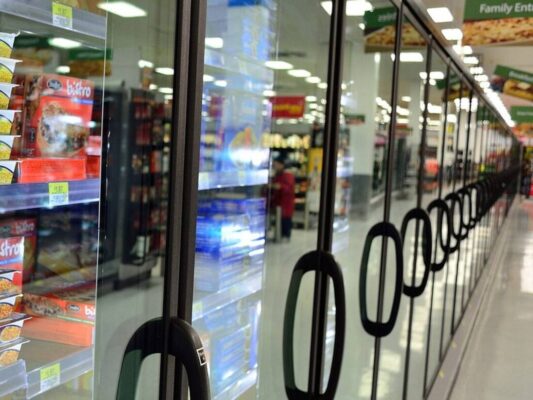
The frozen fish and seafood category page of Morrisons in the UK was read on 1 November 2026, and one product page was opened to confirm pack and price. Several products carried a “New” badge, and promotions included “Buy 4 for £5”. The pages show what was launched and promoted that day. They do not show sales, repeat purchase, stock-outs or how long anything had been on sale.
Table of Contents
The seasonal seafood launch badge is not the result
On 1 November 2026, Morrisons’ frozen fish page in the UK carried a “New” badge beside a 200 g pack of two battered fish fillets. The pack was £2.75 and sat inside a “Buy 4 for £5” promotion. The badge says the product was launched. The promotion says the retailer wants trial. Neither says whether anyone bought it twice.
Three different things are being conflated: a launch, a promotion and a result. A seasonal seafood launch needs to know which one it is buying.
A launch is a distribution event. A promotion is a price event. A result is a change in behaviour measured against a comparison. If the brief does not say which of the three the business wants, the answer after the season will be a story, not a finding.
Three structures, three kinds of evidence
| Structure | What it can show | What it cannot show | Exit rule it needs |
|---|---|---|---|
| Seasonal test | Sales in the season, in the defined stores, against the stated comparison. | Year-round demand, another channel, or repeat beyond the test. | A stated end date, a success condition and a decision on remaining stock. |
| Permanent listing | Availability, long-run rate of sale and behaviour alongside the range. | The season, the launch or the promotion as separate effects. | A review date and a rule for delisting, repricing or repacking. |
| Limited pack | Whether the pack is noticed and whether the price point works. | Repeat demand separate from novelty and limited availability. | A defined run, a sell-through condition and a plan for the remaining pack. |
A seasonal test runs for a stated period in a defined store or channel set, against a comparison basis, with a success condition and an exit rule agreed before launch. It can show whether the product sold in the season, in those stores, against that comparison. It cannot show whether it would sell year-round, or whether the result would repeat in another channel.
A permanent listing is a distribution decision. It can show availability, long-run rate of sale and how the product behaves alongside the range. It cannot isolate the season, the launch or the promotion, because they are not separated in the design. That does not make it a bad decision; it makes it a different decision.
A limited pack changes the pack, the copy or the price point for a defined run. It can show whether the pack is noticed and whether the price point works. It cannot prove the product has repeat demand, because the novelty and the limited availability are part of the treatment.
The structures are not ranked. A permanent listing may be the right commercial choice and a poor test. A seasonal test may be the right learning choice and a poor launch. The mistake is choosing one and reading it as the other.
What makes a trial a trial
The product case is a separate document (business case for a new seafood product); the test design assumes that case is already written.
- A question written as a comparison. “Will the new pack sell?” is not a comparison. “Will the new pack sell more than the existing pack in the same stores over the same period?” is. The comparison basis is part of the design, not an afterthought.
- A period set by the brand. Do not import a test duration from another category, another market or a competitor’s launch. The period should come from your own replenishment cycle, your own data lag and the season you are testing. Write it down before launch. The brand owns the number; this article does not supply one.
- A defined store or channel set. Which stores, which region, which channel, which planogram position? If the product is in every store, there is no comparison. If it is in three stores, the result is a story about three stores. The design has to match the claim.
- A success condition and an exit rule. The success condition says what result would justify the next step. The exit rule says what happens if the result does not arrive: delist, reprice, repack, repeat the test or stop. Both are written before launch, and both name the person who reads the result.
- A record of confounders. Promotion, placement, price, stock-outs, weather, a competing launch. A seasonal test that runs through a promotion is measuring the promotion as well as the product. That is allowed if it is written down; it is not allowed if it is discovered afterwards.
- A named reader and a read date. A result that nobody owns becomes a debate about the weather. Put the name and the date on the page before the launch, not after the numbers arrive.
A listing is not a result
A listing proves the buyer said yes. It does not prove the shopper did. The gap between the two is where seasonal launches go to die: the product is on the planogram, the badge is on the pack, the promotion is in the leaflet, and the review says “it launched well” because everyone can see it on the shelf.
The signal hierarchy is simple. A listing is an input. A promotion is an input. A rate of sale with its denominator, a repeat measure, a stock-out record and a comparison basis are results. Without the denominator, a sales number is a rumour with a decimal point.
The detailed hierarchy — which numbers should change the next brief, and which are only noise — belongs to a separate article on after-launch signals. The point here is narrower: decide what evidence the launch is supposed to produce before you decide how to launch it.
What the page shows
A launch artefact
- A “New” badge and a pack shot.
- A shelf price and a promotion.
- A listing in the category.
- A claim on the pack.
What a result requires
Evidence of behaviour
- A rate of sale with its denominator.
- A comparison basis and a stated period.
- Repeat, stock-outs and waste.
- A named reader and a decision date.
What this cannot tell you
It cannot tell you whether the product sold, whether the promotion worked or whether the season was good. It cannot tell you a test duration, a success threshold or an exit rule that fits your business. Those are decisions, not benchmarks. The page is one retailer, one market, one day; a listing on it is not a result, and a badge is not a repeat purchase.
It also cannot tell you whether a seasonal product should exist. That is a brief question, and it belongs before the launch structure, not after it. If the product has no job beyond “Christmas”, the case for it is a range question, not a test-design question.
What to do next
- Write the question as a comparison before you brief the pack. Name the existing product, store set and period the new one will be judged against.
- Choose the structure and say what it can prove. A seasonal test, a permanent listing or a limited pack. Write the limit of each on one page.
- Set the period, success condition and exit rule before launch. The brand owns all three. Do not borrow an industry norm, and do not move the period because the early numbers are noisy.
- Record the confounders on day one. Promotion, placement, price, stock-outs. If the launch is also a promotion, say so in the result, not in the post-mortem.
A seasonal launch is a decision about what you will know afterwards. If the answer is only “it was listed”, the launch was a distribution event. That is allowed. It is not a test.
Ecosea supports seafood concept and sample preparation, specification development and factory coordination. If you are planning a seasonal launch, we can help define the product and the sample; the test design and the commercial decision remain with the brand.
Before the seasonal launch
Planning a seasonal listing? Ecosea can help define the product and prepare the sample; the test design and the commercial decision remain with the brand.
References
- Morrisons. (2026). Frozen fish & seafood [Online grocery category]. Retrieved November 1, 2026, from https://groceries.morrisons.com/categories/frozen-food/fish-seafood/180364
- Morrisons. (2026). Birds Eye 2 Battered Fish Fillets [Product page]. Retrieved November 1, 2026, from https://groceries.morrisons.com/products/birds-eye-2-battered-fish-fillets/115285122