Seafood pack size decides the portion: six prawn packs on one Spanish shelf, read on 1 November 2026, price the smallest trays highest per kilo and the 2 kg box lowest. Fix the portion first, and the price ladder begins to have a logic.
What the evidence shows
Two Codex texts were opened on 1 November 2026 — the standard for quick frozen shrimps or prawns (CXS 92-1981) and the labelling standard (CXS 1-1985) — together with the frozen seafood category and six product pages of one Spanish retailer. The six packs are quoted exactly as that site publishes them: pack price, unit price and a declared drained weight. That is one retailer, one market, one day, read online. It shows what six packs cost and what they declare; it shows nothing about household size, freezer space, waste, promotions or sales, and a listing is not sell-through.
Table of Contents
The seafood pack size brief that starts with a price
The brief says the entry price has to sit under five euros. The work comes back at €4.90, the price is met, and the pack now holds one meal where the last one held two. Nobody made an arithmetic mistake. The mistake was in the order: the price was fixed first, and the portion was left to whoever answered the brief.
Pack size is a portion decision. It decides how many times a household opens the pack, whether what is left fits back in the freezer, and whether the second half gets cooked or forgotten. Price is what those answers cost. Decide it first and the ladder has a logic; decide it last and every rung is an accident with a barcode.
What one shelf shows
On 1 November 2026 the frozen seafood category of one Spanish retailer listed twenty products. Six prawn packs from that page are enough to see the shape of the problem, quoted exactly as the site publishes them: pack price, unit price and a declared drained weight.
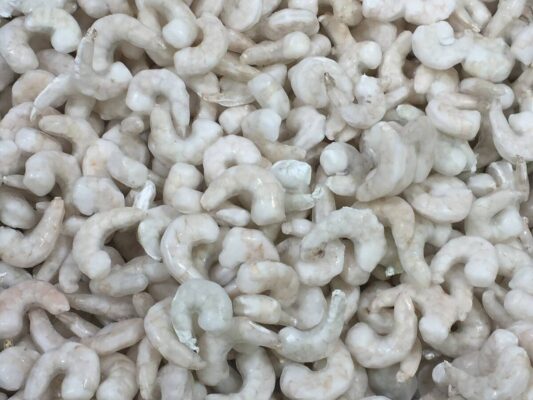
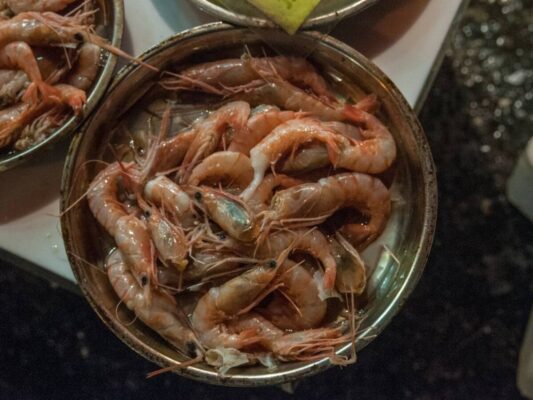
The cheapest pack to pick up, at €3.95, is a 220 g tray of peeled raw langostino at €17.96 a kilo. The most expensive, at €19.90, is a 2 kg box of whole gambón at €9.95 a kilo. Between them the shelf runs in both directions at once, and the reason is not the size.
Two pairs that isolate the pack
Take the two 360 g packs first. Both are peeled raw gamba, both 360 g, and one costs €4.90 (€13.61 a kilo) while the other costs €5.95 (€16.53). The difference is the grade — mediano against grande. Then take two 220 g packs of the same species: €3.95 raw (€17.96 a kilo) against €5.00 cooked (€22.73). Neither pair changes the pack size, and both change the unit price by more than any pack decision will.
Same 360 g
The grade moves the price
- Peeled raw, mediano: €4.90, or €13.61 a kilo
- Peeled raw, grande: €5.95, or €16.53 a kilo
- Same weight, same process, same shelf
Same 220 g
The cooking step moves the price
- Peeled raw: €3.95, or €17.96 a kilo
- Peeled cooked: €5.00, or €22.73 a kilo
- Same species, same weight, one step on the line
That is the first thing to learn from a shelf: the unit price is not a property of the pack. It is a property of what is inside it, and the pack is the multiplier.
What the pack is deciding
Five things, in this order.
How many portions leave the pack at once. A 220 g tray of peeled cooked shrimp, split between two people at 100 g each, is one meal with 20 g left; a 360 g tray is the same meal with 160 g left. The 100 g is our assumption, printed so you can replace it with yours. The arithmetic is not a recommendation; it is the question the pack answers.
Whether the household can cook it in one go. A tray that fits one oven shelf and one pan is a different product to a box that has to be divided while frozen.
Whether the freezer has room for what is left. Reclosing matters more than weight: a tray with a film lid can go back, a bag of IQF shrimp can be poured from, a block cannot be halved without a saw.
What the price point can be. A 200 g pack lands under five euros almost by construction. A 2 kg box cannot.
What the pack says about the product. A small tray with a film lid reads as an ingredient for tonight. A large box reads as a store-cupboard purchase. The two can hold the same shrimp and promise different dinners.
| Occasion | The question that sets the portion | What the pack must do | Format that usually fits |
|---|---|---|---|
| Midweek meal, one or two | How much is plated, and is anything left? | Open once, cook once, reclose nothing | Small tray, peeled, raw or cooked |
| Family meal | Does the whole pack fit the oven or the pan at once? | Cook from frozen in a single layer | Medium tray, or a bag of IQF pieces |
| Sharing or a starter | How many pieces per person, and does it look right on a plate? | Countable pieces of even size | Coated or whole, count-graded |
| Store cupboard | How long between openings, and can it be poured from? | Free-flowing, recloseable, freezer-stable | Large box or bag, IQF |
The trap: shrinking the pack to hit a price point
When the price is fixed first, the cheapest route to it is usually to change the product rather than the pack. The pack can lose weight and keep its format; or the format can lose its peeling, its grade or its cooking. On this shelf all three routes are priced: peeled and cooked at €22.73 a kilo, peeled and raw at €17.96, whole and frozen at €9.95.
A brief that says “under five euros” has not chosen between them. The factory will choose, and it will choose the version that meets the number with the least disruption to its line — which is not necessarily the version the shopper wanted. The choice between a smaller pack and a cheaper recipe has its own playbook (a smaller pack or a different product); this article stays on the portion side of it.
There is a second trap underneath. A price per kilo is comparable only if both packs are priced on the same basis, and for a glazed product the basis is the drained weight: Codex requires the declared net contents of a glazed product to exclude the glaze (Codex Alimentarius Commission, 1981, §6.2). This retailer publishes the drained weight on the page, which is why the arithmetic above works. Where a shelf prices on another basis, the ladder is not a ladder. The glaze arithmetic is older ground, set out in The Ice in the Box.
| Product as listed | Format as named | Declared drained weight | Pack price | Unit price |
|---|---|---|---|---|
| Langostino crudo y pelado | Peeled, raw | 220 g | €3.95 | €17.96/kg |
| Camarón boreal cocido y pelado | Peeled, cooked | 200 g | €4.75 | €23.75/kg |
| Gamba pelada cruda, mediano | Peeled, raw | 360 g | €4.90 | €13.61/kg |
| Langostino cocido y pelado | Peeled, cooked | 220 g | €5.00 | €22.73/kg |
| Gamba pelada cruda, grande | Peeled, raw | 360 g | €5.95 | €16.53/kg |
| Gambón grande | Whole, frozen | 2 kg | €19.90 | €9.95/kg |
And a pack change is not a trade-up. A new tier needs something the shopper can verify, which is a separate argument and a separate article (what makes a shopper pay more for the same species).
What this cannot tell you
One retailer, one market, one day, read online. Twenty products were listed and six are quoted. The weights are the site’s declared drained weights, not packs we opened and weighed, and a declared weight is an average obligation, not a promise about every pack. No household size, freezer capacity, waste, promotion history or sales figure sits behind any of this, and a listing is not sell-through.
Nor does it say the big box is the better buy. It says the big box is a different product with a different job, and its price per kilo reflects that job rather than its size.
What this does not show Which pack size is right for a given household. That decision needs the retailer’s own shopper data — basket size, repeat rate, freezer ownership — and we had none of it. The article prices six packs; it does not recommend one.
What to do next
- Write the occasion before the weight. “Two adults, one midweek meal” is a brief. “220 g” is an answer to a question nobody has asked yet.
- Print the portion assumption. Put grams per person into the brief so the factory and the buyer argue about one number instead of two.
- Price the ladder on one basis. Same retailer, same day, unit price on drained weight. If the basis is not stated, the comparison is not one either.
- Treat a format change as a product change. Peeled to unpeeled, raw to cooked, grade down: each needs its own sample, its own price and its own line on the pack.
A pack size is the number of meals in the freezer. Count them before you price them.
Ecosea works on seafood specification, sample development and factory qualification. If you are setting a pack size for a species, we can lay the available packs, grades and processes side by side and say which difference a shopper can actually see.
Before the next range review
Setting a pack size? Ecosea can put the packs, grades and processes you are choosing between into one comparison — portion, net weight and price basis on the same line — before the brief leaves the building.
References
- Codex Alimentarius Commission. (1981). Standard for quick frozen shrimps or prawns (CXS 92-1981, revised 1995, amended 2014). Food and Agriculture Organization of the United Nations; World Health Organization. https://www.fao.org/input/download/standards/107/CXS_092e.pdf
- Codex Alimentarius Commission. (1985). General standard for the labelling of prepackaged foods (CXS 1-1985, amended 2010). Food and Agriculture Organization of the United Nations; World Health Organization. https://www.fao.org/input/download/standards/32/CXS_001e.pdf
- Mercadona. (2026). Congelados: Marisco [Online grocery category 150]. Retrieved November 1, 2026, from https://tienda.mercadona.es/categories/150
- Mercadona. (2026). Gamba pelada cruda tamaño mediano Hacendado ultracongelada [Product page]. Retrieved November 1, 2026, from https://tienda.mercadona.es/product/24181
- Mercadona. (2026). Gamba pelada cruda tamaño grande Hacendado ultracongelada [Product page]. Retrieved November 1, 2026, from https://tienda.mercadona.es/product/24230
- Mercadona. (2026). Langostino crudo y pelado Hacendado ultracongelado [Product page]. Retrieved November 1, 2026, from https://tienda.mercadona.es/product/24486
- Mercadona. (2026). Langostino cocido y pelado Hacendado ultracongelado [Product page]. Retrieved November 1, 2026, from https://tienda.mercadona.es/product/24477
- Mercadona. (2026). Camarón boreal cocido y pelado Royal Greenland ultracongelado [Product page]. Retrieved November 1, 2026, from https://tienda.mercadona.es/product/24267
- Mercadona. (2026). Gambón grande congelado [Product page]. Retrieved November 1, 2026, from https://tienda.mercadona.es/product/24260