Most seafood sampling programmes fail twice: once because the brief asked for the wrong product, and once because nobody wrote down which failure it was. A one-page record and a version number turn the next round into evidence.
What the evidence shows
Codex fixes the measurable parts of the exchange — sensory samples assessed by trained assessors against a defined method, and cooking to an internal temperature of 65–70 °C with times set by prior experiment (Codex Alimentarius Commission, 1981, §7.2, §7.6; 1999). No Codex text classifies a miss as a brief fault or a factory fault, and no standard prescribes a feedback record. That classification, the record and the one-change rule below are Ecosea’s method. The worked example is illustrative, not a client project.
Table of Contents
The seafood sampling round that taught nobody anything
The factory sends round three. The panel says the coating is still too soft. The buyer asks for round four. Between those two sentences, the raw material changed, the pickup went up, the pre-fry time moved and the pack was resized.
The next sample is better. Nobody can say which change did it, whether it will survive production, or what to hold fixed next time. Ten rounds like this end with a product that happens to be acceptable and a specification that describes nothing.
The cost is drift. Each sample is judged against the previous sample rather than the brief, so the target moves and the programme converges on whatever the line already makes.
Two kinds of miss, one decision
A miss is either a concept error or an execution error, and the two call for opposite actions.
A concept error means the brief asked for a product the process cannot deliver: an attribute that was never defined, a target no available raw material will reach, or two clauses that pull against each other. A thin coating and a hard bite. A twelve-month frozen shelf life and a clean ingredient list. A 30 g portion and a hand-held format. Codex requires a breaded product to declare its fish content (CXS 166-1989, §6.1); a fish content written without a method is the same kind of concept error.
An execution error means the brief set a target and the sample missed it: pickup under the declared band, count outside the range, core temperature short of the validated cook, glaze outside the agreed tolerance.
Ask three questions, in this order.
- Is the attribute written as a number and a method? If the brief says “firm” and nothing else, the miss is conceptual: nobody can miss a target that was never set, and no factory can be held to an adjective.
- Can one process change move the attribute without breaking another clause? If no single lever moves it, the brief is asking for a product this line cannot make, and another round will only produce another near miss.
- Would a second capable factory, given the same brief, make the same miss? If yes, the brief caused it. If no, the problem is local to this line, its raw material or its process.
Then act: a concept error sends you back to the brief, possibly to a different product; an execution error keeps the brief and changes one variable. Doing both at once is how a programme spends a year learning nothing.
Concept error
The brief asked for the wrong product
- No sample can pass, because the target was never written.
- Two clauses conflict, or no raw material reaches the number.
- A second capable factory would make the same miss.
- Next: rewrite the brief before the next sample.
Execution error
The line missed a defined target
- The attribute has a number, a tolerance and a method.
- One process lever can close most of the gap.
- The same brief elsewhere would not produce this miss.
- Next: keep the brief, change one variable.
One change per round
A round is an experiment; one that changes three things proves nothing about any of them.
The discipline is one controlled change per round, declared before the sample is made: what will change, by how much, which attribute should move, and what result would count as a miss. Everything else stays fixed: raw material lot, line, pack and cooking method. Codex treats a significant change to process, product or packaging as a reason to revalidate (CXC 52-2003, §5.3.8); a sampling round is the same rule at a smaller scale.
Version numbers do the rest. The brief carries a version. Each sample carries the brief version it was made against and its own number. A sample marked v4 but made against brief v2 is a different product from one made against v3; the panel should not treat them as neighbours.
The panel scores against the target; it does not choose a favourite. Preference is a concept signal, not a defect; mixing the two is how “we liked the second one” becomes a specification with no method.
- Round 01Three changesBatter, pickup and pre-fry time move together. Nothing can be attributed.
- Round 02One lever: pickupHeld inside the declared band. The panel result now has a cause.
- Round 03One lever: pre-fryPickup fixed. A second cause is isolated, not guessed.
- Round 04Write the clauseNumber, method and tolerance can finally be specified.
The record that makes the next round useful
One page per round, written before the next sample is requested. Not a report — a decision record.
- Version chain. Brief version, sample version, and the date each was issued.
- Attribute under test. The target, the tolerance and the method. “Pickup 28–32% by the agreed method”, not “good coverage”.
- Result. The measured value and the delta from target, in the same units the specification will use.
- Panel. Who assessed, how many samples, and against which reference.
- Classification. Concept or execution, with the three answers that decided it.
- Next change. The single change authorised, who authorised it, and what result would count as a miss.
Two rules keep it honest. The person who measures does not sign off alone; the buyer’s technical lead does. And a round with no written change is a repeat, which only measures the line’s day-to-day variation.
| Field | What it holds | Illustrative entry |
|---|---|---|
| Version chain | Brief version, sample version, issue dates | Brief v3 · Sample v5 · 14 October |
| Attribute | Target with tolerance, in the specification’s units | Pickup 28–32% of finished weight |
| Method | How the value is measured and on what sample | Agreed de-glaze and weigh method |
| Result | Measured value and delta from target | 34.1% · +2.1 points |
| Classification | Concept or execution, with the three answers | Execution · number set, one lever available |
| Next change | The one authorised change, its owner and its kill criterion | Lower pickup only · signed by buyer QA |
What a recorded round looks like
Illustrative example, not a client project.
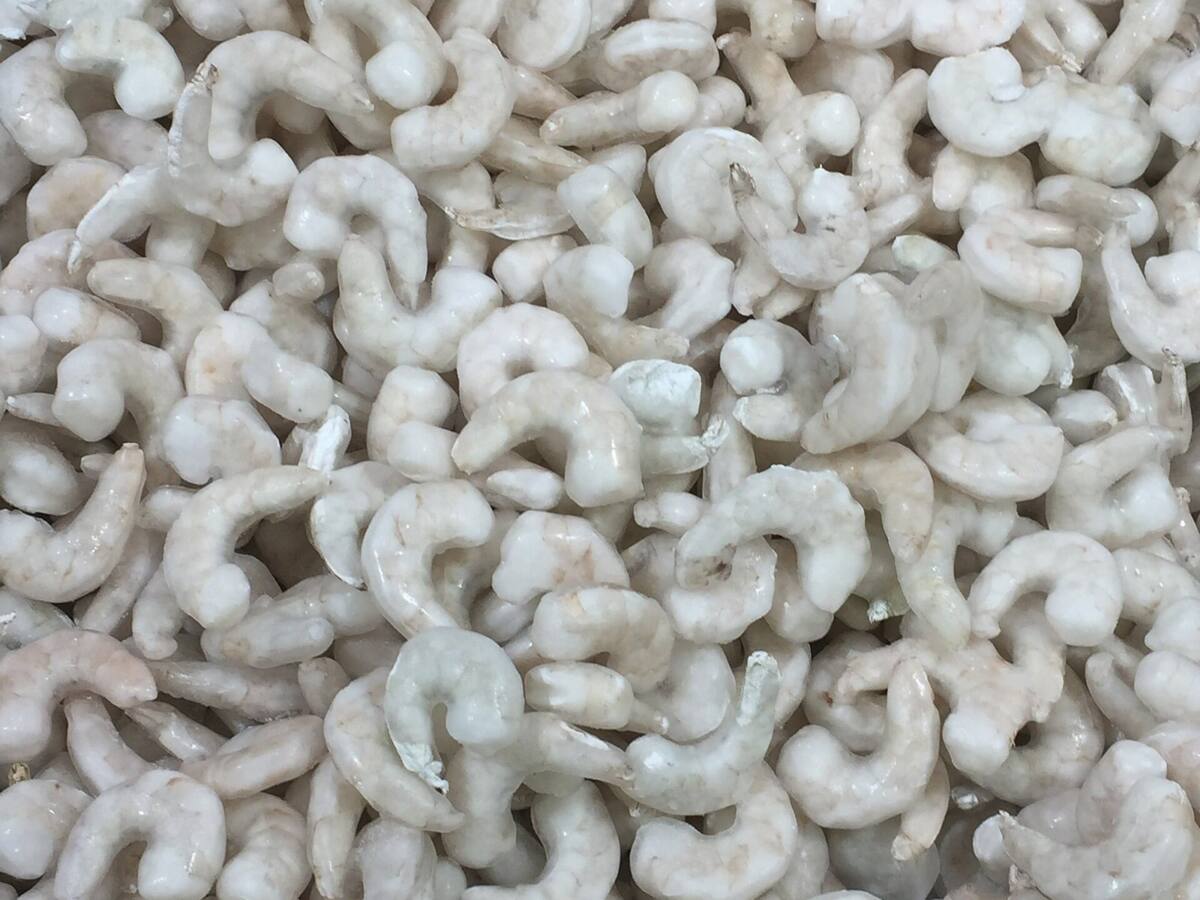
A panel rejects three samples of a frozen coated shrimp because the coating feels soft. The email trail shows what went wrong: round one changed the batter mix, the pickup and the pre-fry time together, so the result cannot be attributed to any of them.
The rework begins by defining the attribute as force at first fracture, measured on a texture analyser under a stated thaw and cook protocol, with a target band agreed by the buyer. Round two changes pickup only, inside the declared band. Round three changes pre-fry time only, with pickup held. By round four the factory knows which lever moves the number and which leaves it flat, and the specification can carry both the number and the method.
Nothing there promises a better product, only that the next sample answers a question — and that the answer is still readable after the panel has changed jobs.
What to do next
- Classify before you brief. Write concept or execution on the record, with the three answers beside it. The word decides whether the brief or the line changes.
- Authorise one change. Put it in the record before the sample is made, not in the covering email afterwards.
- Keep the version chain. A sample without a brief version is a prototype, not evidence — and a prototype cannot be approved.
This is where sampling hands over to factory-direct development: a brief that can be failed is also a brief a factory can be held to. The question of who signs the approved result sits in the quality-control gap, where the sample becomes a standard rather than a memory.
A sampling programme is not a sequence of samples. It is a sequence of answered questions, and a round that changes everything answers none of them.
Before the next round
Stuck in sampling rounds? Ecosea can review one unresolved sample, classify the miss and write the next round so it tests a single variable.
References
- Codex Alimentarius Commission. (1981). Standard for quick frozen shrimps or prawns (CXS 92-1981, revised 1995, amended 2014). Food and Agriculture Organization of the United Nations; World Health Organization. https://www.fao.org/input/download/standards/107/CXS_092e.pdf
- Codex Alimentarius Commission. (1989). Standard for quick frozen fish sticks (fish fingers), fish portions and fish fillets — breaded or in batter (CXS 166-1989, amended 2014). Food and Agriculture Organization of the United Nations; World Health Organization. https://www.fao.org/input/download/standards/112/CXS_166e_2014.pdf
- Codex Alimentarius Commission. (1999). Guidelines for the sensory evaluation of fish and shellfish in laboratories (CAC/GL 31-1999; text at Step 8, Appendix II). Food and Agriculture Organization of the United Nations. https://www.fao.org/4/w9253e/w9253e0k.htm
- Codex Alimentarius Commission. (2003). Code of practice for fish and fishery products (CXC 52-2003, as revised). Food and Agriculture Organization of the United Nations; World Health Organization. https://www.fao.org/input/download/standards/10273/CXP_052e.pdf